

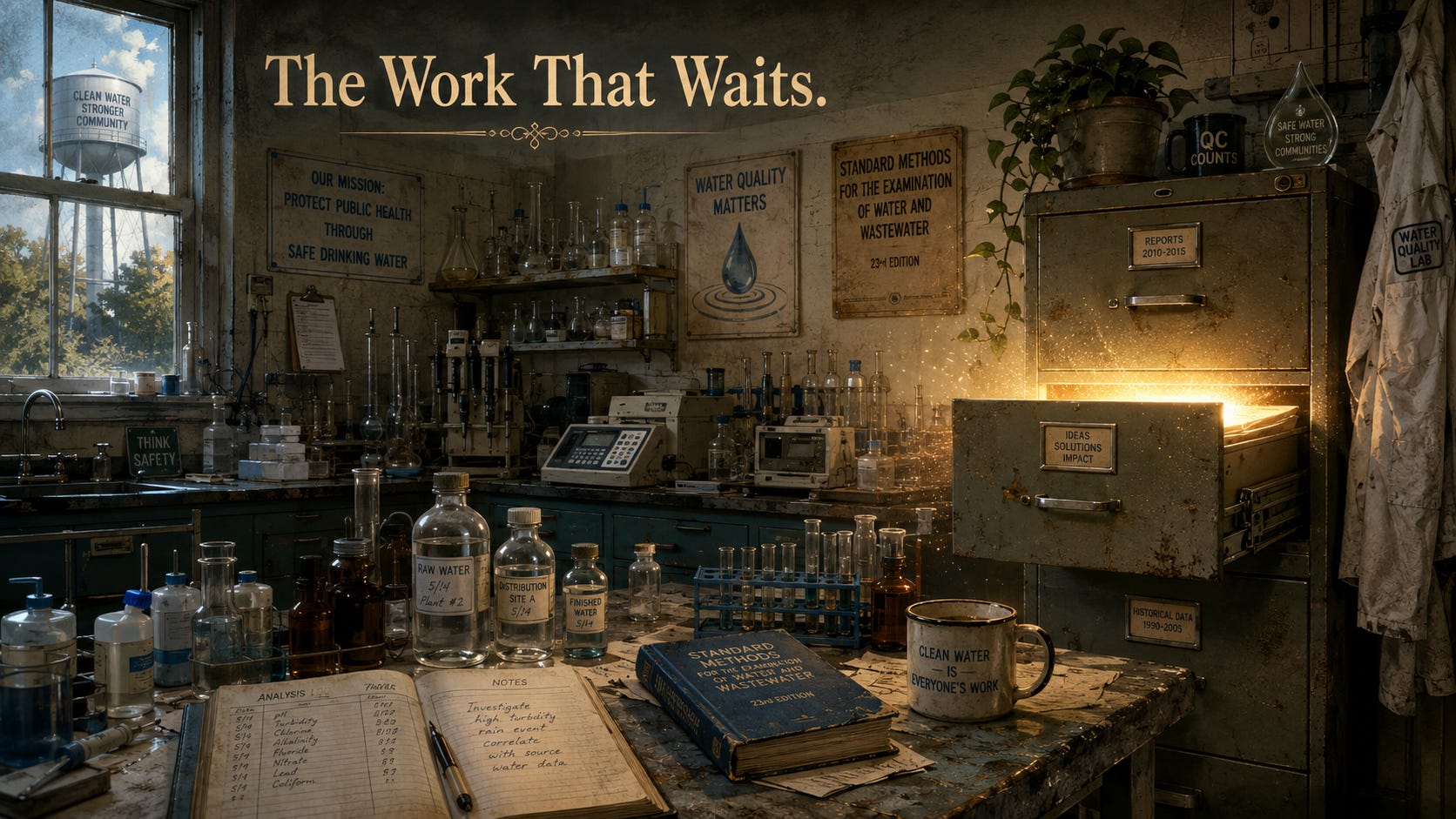
One of the cool things about water is it touches on just about every type of science and tech I can think of. For such a common aspect of our lives, it’s actually fairly complex. I am constantly finding new avenues to explore and learn. Since artificial intelligence tools have become available, it’s really hyper charged what I can find, learn, and build. So much so that it’s hard to find time for the blog. If one were interested, you could look at my GitHub profile and see what I mean. One very interesting thing I’ve realized though is that so much intellectual work is already started and developed. Some of the really innovative things I find were proposed in the 60s, 70s, 80s, etc. The bottleneck at the time was resources. Complex models, computation, time…. These were in short supply. But now? New tools we have available make many of these bottlenecks trivial and would allow people to take off like rockets. It seems to me this is a great place to look for the future. It’s always been about building on the work of others, these are treasure troves. I want to do this. I’m doing it now.
Two guys in a bureaucracy
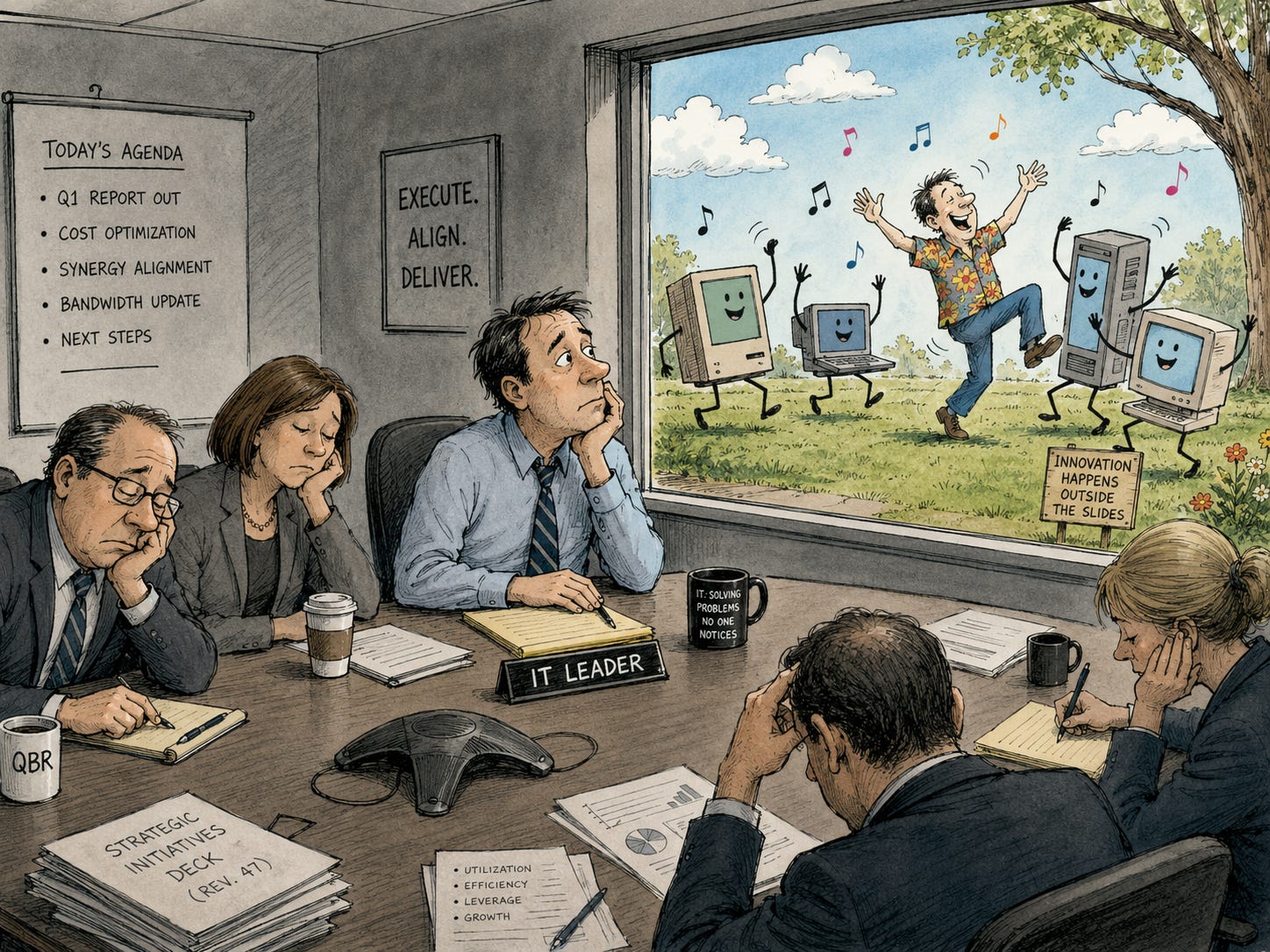
Brandon is a senior IT/OT leader at the SFPUC and an operational technology wizard, Gandalf with a laptop. We love to riff on what we should do with water. But we work in a bureaucracy. Brandon, who could be devising bulletproof redundant SCADA networks, or predictive disinfection byproduct models, has to sit through mind numbing meetings. And I could be creating digital operational toolboxes that could make a 2 year operator work at the speed of five 15 year vets, but I’m stuck watching the SCADA terminal and doing payroll. But we can dream. And we do. Early in his career Brandon did do predictive modeling. People don’t realize water adopted AI years ago, but it was called machine learning, digital twins, optimization. But it hit a wall. This work needed compute that was hard to get, but depending on how you measure it we have 10,000 to 400,000 times that now at a way lower cost1. So why don’t we get back to those models? Well, I tried.
Brandon thought it was a great idea. He encouraged me to contact our head of water quality. But water quality themselves are bogged down in the bureaucracy. They need a water quality engineer for a project like this, not an operator (i.e. me). They are understaffed like every other group, and not looking for more work. Then also, my bosses caught wind and they’re not happy I’m talking to people outside of operations. I need to stay “in my lane.” From my view this is my lane. I am here to help people, to learn, to make water better. But public agencies are rigid and don’t do innovation well, even if the seeds were planted years ago. Although this doesn’t mean the work has to stop, we just need to call in reinforcements.
These are my people
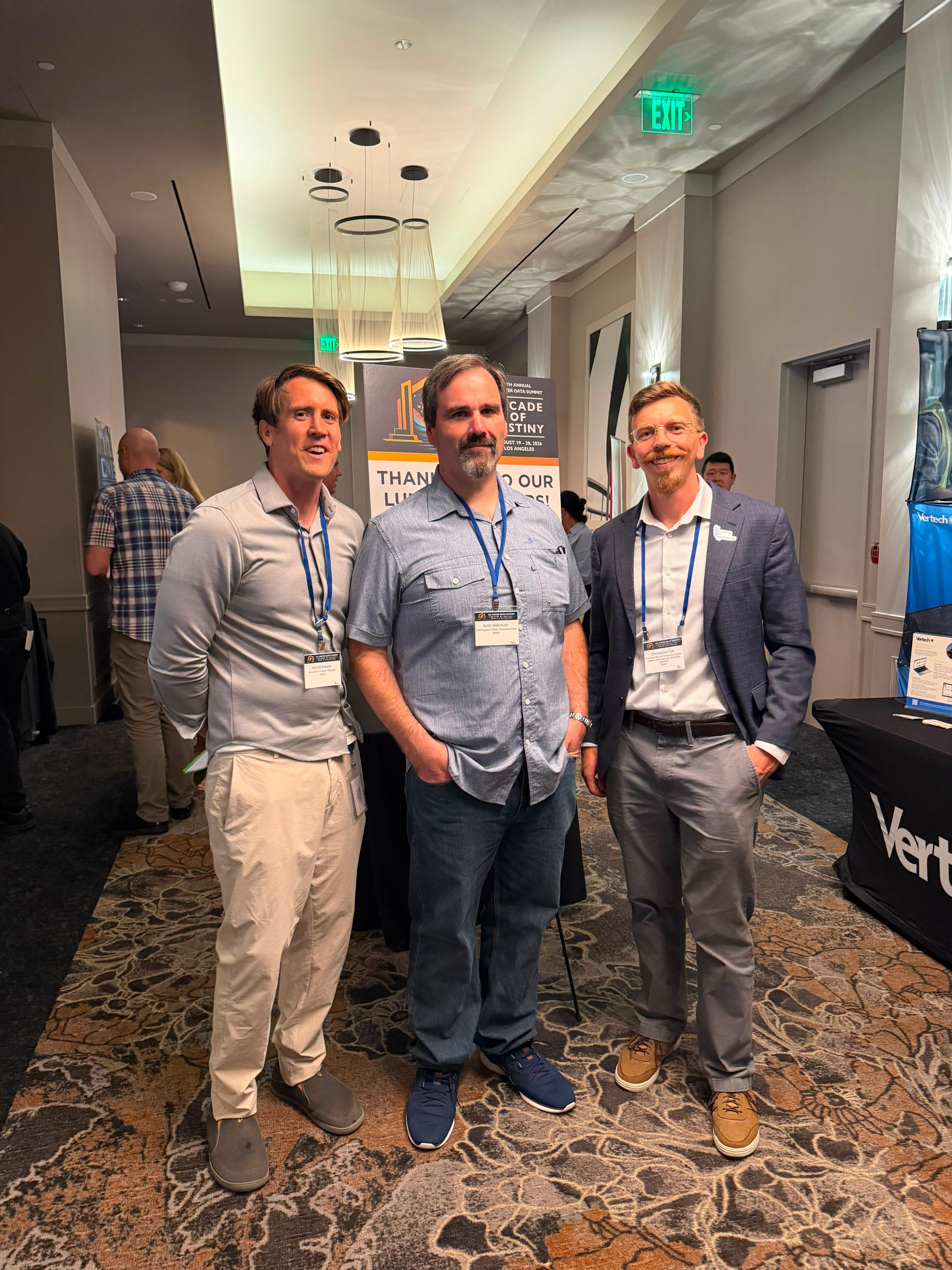
This past week I had the opportunity to go to the California Water Data Summit. It was fantastic. Really, really cool. These are my people. The data summit is hosted by the California Data Collaborative. They had been a group I admired from a distance, but being there I see what it really is. Yes, public agencies are rigid, but they’re not alone. The CaDC is an NGO. It’s not part of the government but it is determined to help it. They provide resources that genuinely help make water better in California. They help water agencies make planning, conservation, regulatory, and operational decisions using better shared data, analytics, software, and applied research. They also partner with private-sector technology, analytics, and consulting partners, alongside universities, nonprofits, and public agencies, to develop tools, conduct applied research, and share implementation lessons. This is the model, I can see it. The public sector, the private sector, and academia all have their pros and cons but together Americans get better water. And individuals, despite their bureaucracies, are hungry to meet this challenge. As a matter of fact the manager of innovation at the Metropolitan Water District of Southern California is raring to collaborate. Imagine a Giants and a Dodgers fan working together. Truly this is a powerful idea.
The work that is waiting
So this brings me back to what Brandon and I were talking about. The work that is waiting for us. Brilliant work our predecessors and younger selves did that is ready for this moment. I have a great first target too. (Well, I have like 50 targets but gotta start somewhere.)
In 2016 California passed the Open and Transparent Water Data Act, AB 1755. By its nature water creates a lot of data and it belongs to the public. The act called for an integrated statewide water data platform, protocols for sharing and documenting information, public access, open-source tools, and systems that could help people make decisions with the data. It recognized that this information belongs to all of us and we need to make it available. They followed up with the 2018 Data for Water Decision Making effort to really make sure we use it. But it’s easier said than done. CaDC has been instrumental here, helping get that data available and usable. This was before all the AI talk and shows the government being really insightful. It identified interoperability, different formats and resolutions, governance, stable funding, cyberinfrastructure, and user-centered design as the real problems. It also makes a distinction that’s important. It’s not just about collecting data but using it.
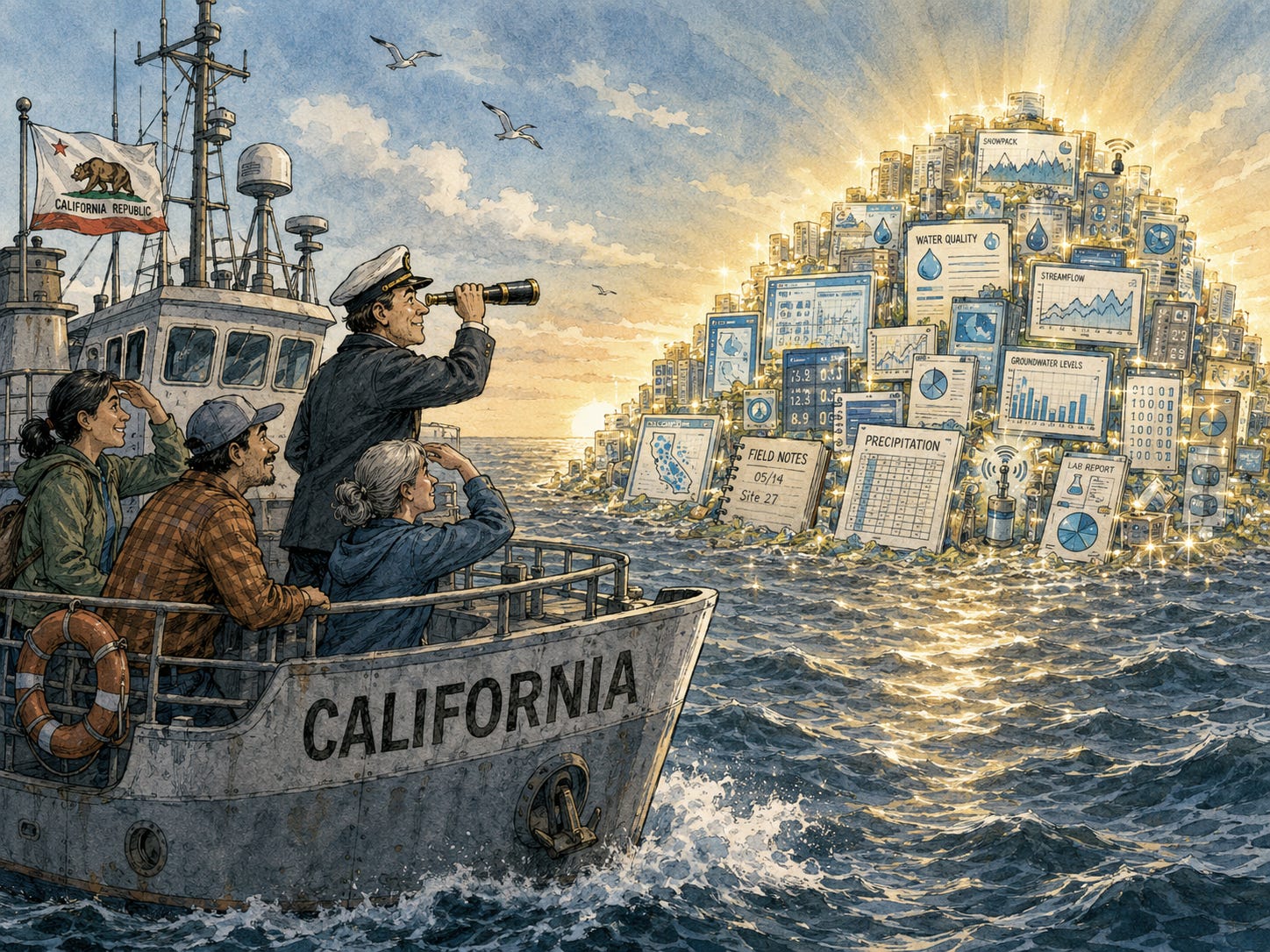
But at the California Water Data Summit I heard about the bottlenecks. Agencies struggle to gather, format, and send the requested data. Small agencies don’t have the resources, and large ones can have coordination issues. What does get sent to the state hits another bottleneck. The state has limited resources and ingesting the malformed, diverse data is hard. Getting a spreadsheet that only contains a PDF, which is a scan of a paper document, is more common than you would think. The state though is really trying to get the available data out there to the public, and they do. But is anyone using it? The state itself is struggling to process the data in a meaningful way. Which I get, this is A LOT of data. And this is the current stuff. They have records going back 100 years that contain priceless insight but it’s locked behind a lack of resources. But it’s there, it’s waiting. It was waiting for now.
Private industry may look at this and see a solved problem. I’m sure Salesforce can sell you something, but would it really fix it? Too often in government we buy a fix and it just adds a layer of bureaucracy. The solution is to give the builders tools. CaDC gives you tools. You are the domain expert. You know how it should work, how it could work. SaaS has a place but this is core water work and we have folks that love this stuff. But their hands are tied.
Where are we heading?
So what’s this mean? It means looking beyond the usual procurement model. And I have been looking. One interesting avenue has been what other data lovers are doing. Frontier AI labs have money, compute, and engineers they want to put toward public-interest problems. The OpenAI Foundation is commiting over $1 billion in the next year to expanding what civil society can accomplish; Anthropic is pairing nonprofits with AI fellows through Claude Corps; Google.org is funding AI for government innovation; and NVIDIA has a model for putting technical staff on scoped nonprofit projects.
Water utilities should be able to compete for that kind of support, not to buy another black-box “solution,” but to give operators, engineers, and analysts the capacity to build the tools they already know they need. The value is not another SaaS layer. It is compute, technical assistance, open tooling, and time for the people who understand the plant, the data, the regulations, and the consequences of getting it wrong.
It means if a researcher from the University of Michigan is really interested in putting her expertise in neurosymbolic AI into water, we say hell yes (thank you Dr. Utkarshani Jaimini!). It means when I partner on a paper for anomaly detection for cyber security for water treatment facilities with the awesome USC PhD candidate Chathurangi Shyalika (to be submitted to AAAI Fall Symposia this month!), my agency gives me its full support.
It means we don’t stay in our lanes, we help people, and we fix things. That is fun, and I think a lot of people are ready for the work that is waiting for us.
A 16-CPU Sun Enterprise 10000 cost about $870,000 in 1997—about $1.81 million in 2026 dollars. A complete RTX 5090 AI workstation costs roughly $5,000 today. In other words, a desktop system with radically greater AI and parallel-compute capability costs about 360 times less in real terms. The RTX 5090 workstation would run a large unmodified EPA EPANET model roughly 200× faster than a 16-CPU Sun Enterprise 10000, and deliver roughly 70,000× more EPANET throughput per inflation-adjusted dollar.