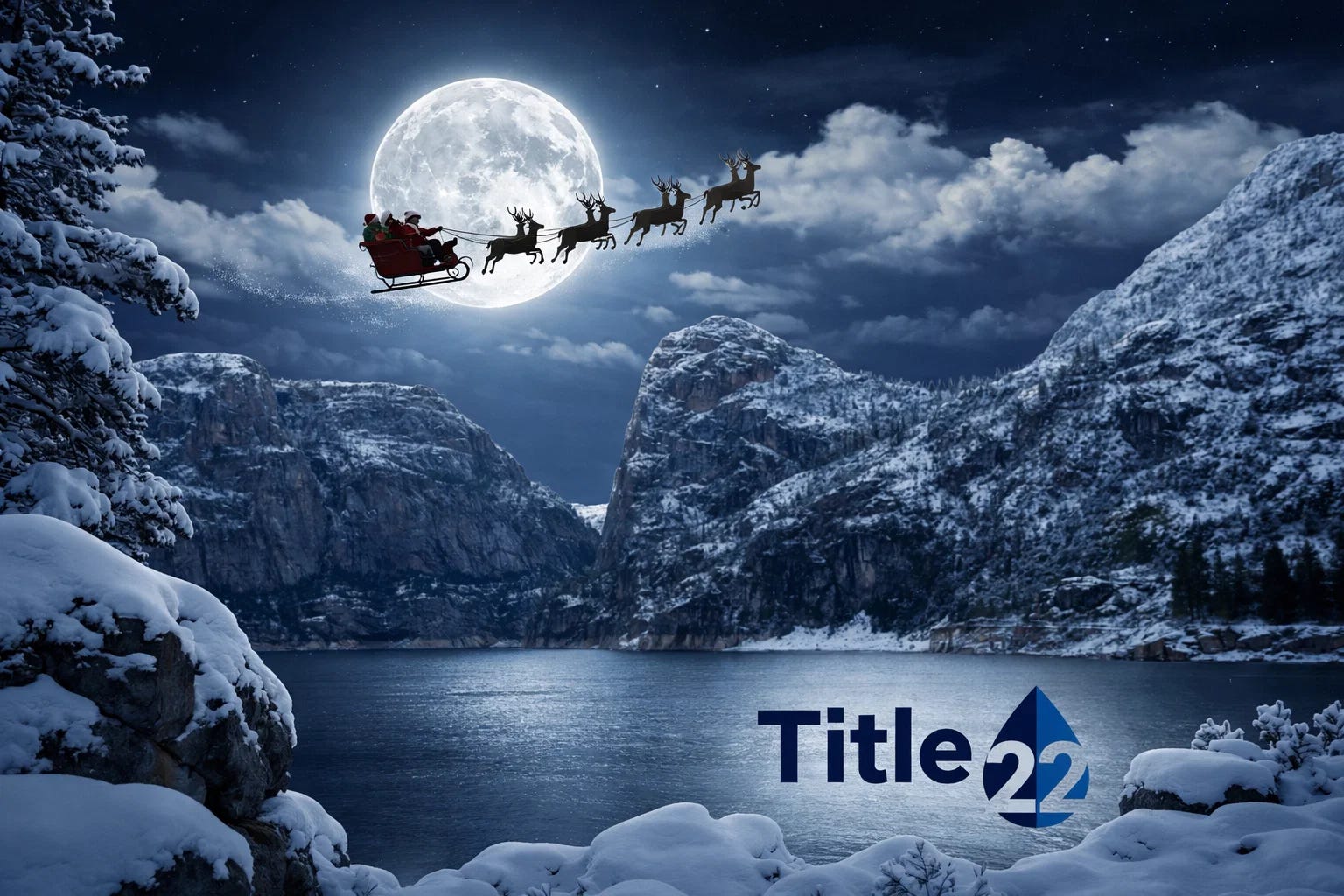
C.S. Lewis once described a world under a spell of stagnation: “It is she that makes it always winter. Always winter and never Christmas; think of that!”
Reflecting on 2025, that line hits close to home. It has been a year difficult to categorize and even harder to predict where it leads. We saw genuinely amazing advances alongside bitter defeats; we were given tools of incredible promise and forewarnings of sobering challenges. There was hard work, certainly, but for many of us, it felt like that Narnian winter. Cold, stripped of celebration, and waiting for a thaw that kept getting delayed.
Yet, I find myself stubbornly optimistic.
My hope doesn’t come from the news cycle, the history books, or the media. It comes from people.
For me, 2025 was the year I decided to step out of my comfort zone. I took calculated risks on the belief that I, and everyone else, have something unique to offer for the greater good. That shift in mindset led me to others who want to do the same. It reminded me that I don’t hate humanity for the bind we find ourselves in; I just see that we are scared.
This “long winter” has people frightened, and scared people hoard resources. I look at the squirrels outside my window, frantically burying acorns. It is natural to be scared sometimes, but it is dangerous to be scared for a long time. My friends the squirrels are hiding nuts for the spring because they know, instinctively, that spring will come regardless of what we humans do.
The tragedy right now is that we humans seem to have lost the ability to imagine the spring. We are stuck in the eternal winter, surviving but not dreaming.
I think that might be the key. The magic of being a person is the ability to imagine. It is the necessary first step before doing, before building, before creating.
My hope is that 2026 is the year we relearn how to imagine the spring.
As you head into this holiday, I hope you look for the light in other people. Know that light, though diminished by fear, cannot be extinguished by it. And remember the math of hope: two lights combined glow with the strength of three; three lights combined glow like six. That illumination is enough to show a pathway to a bright future.
We have work to do. When I look at the road ahead for 2026, I am reminded of Robert Frost, who understood the tension between being frozen in a moment and the duty of the journey:
Whose woods these are I think I know.
His house is in the village though;
He will not see me stopping here
To watch his woods fill up with snow.
My little horse must think it queer
To stop without a farmhouse near
Between the woods and frozen lake
The darkest evening of the year.
He gives his harness bells a shake
To ask if there is some mistake.
The only other sound’s the sweep
Of easy wind and downy flake.
The woods are lovely, dark and deep,
But I have promises to keep,
And miles to go before I sleep,
And miles to go before I sleep.
Merry Christmas.